
Toilet Replacement in Denver, CO
A toilet that rocks, leaks at the base or runs constantly is wasting water and putting your floor at risk. We remove the old one and set a new toilet level, sealed and tested.
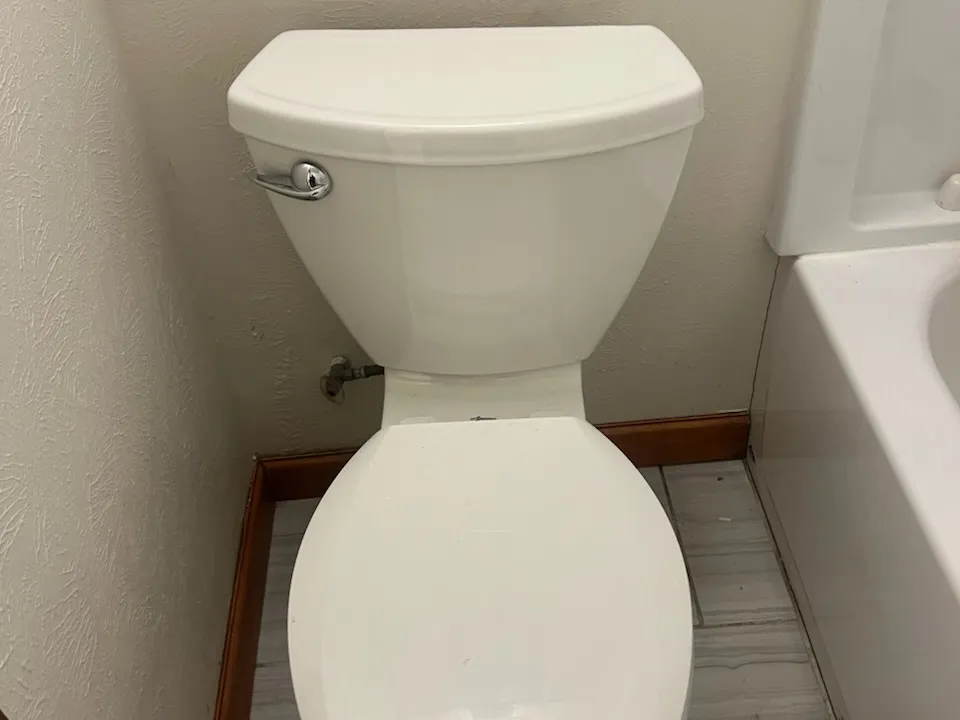
A toilet swap that does not leak a year later
Replacing a toilet is one of those jobs that looks simple and goes wrong in small ways: a wax ring that does not seal, a toilet that is not level, a flange that sits too low or is cracked, a supply line that was reused. Each of those is a leak waiting to happen, and a toilet leak often does its damage underneath the floor where you cannot see it.
Before we set a new toilet we check the parts of the installation you do not see: the closet flange, the shutoff valve, and the condition of the floor around the old toilet. Homes built before the mid-1990s often have toilets that use around 3.5 gallons per flush. WaterSense-labeled toilets use 1.28 gallons or less, a difference you will see on a water bill.
We help you choose a toilet that fits your bathroom: the distance from the wall to the drain (the rough-in, commonly 12 inches), the shape of the bowl, and the height that works for the people in your house.
Signs it is time to replace a toilet
- Rocking at the base. A loose toilet can mean a failing seal, a loose flange or soft flooring.
- Water around the base. A failed wax seal or a cracked bowl. Either way, do not wait.
- A crack in the porcelain. Hairline cracks in the tank or bowl can open into leaks.
- Running or refilling constantly. Worn internal parts can sometimes be replaced, but on an old toilet a swap may be the better value.
- Frequent clogs. Older low-flow models sometimes lack the flush power of current designs.
- An old, high-volume toilet. Models from before the mid-1990s use much more water per flush.
How we replace a toilet
Shut off and empty
We close the supply valve, empty the tank and bowl, and disconnect the supply line.
Lift out the old toilet and inspect the flange
Once the old toilet is out, we inspect the flange and the floor around it, since this is where hidden damage shows.
Set the new toilet
We place a new wax or rubber seal, set the toilet level on the flange and secure it with new bolts.
Connect, test, finish
We connect a new supply line, flush several times to check for leaks and finish the base.
What affects the cost of toilet replacement
Replacing a toilet is a small job unless the surprises show up under the old one:
The toilet you choose
Basic models cost far less than comfort-height, dual-flush or smart toilets.
Flange condition
A cracked or too-low flange needs repair before the new toilet can be set.
Floor damage
Long-term leaks can soften the subfloor, which needs to be addressed.
Shutoff valve and supply line
Old, stuck or leaking shutoff valves are commonly replaced at the same time.
Removal of the old toilet
Hauling away the old unit is typically part of the job. Tell us if you want to keep it.
Why Perez Plumbing for toilet replacement
Because Jaime also works on drain lines, he treats the toilet as the top of the system, not a standalone fixture. If a new toilet clogs because of a drain problem, he will find that out before you do.
You get a toilet that is installed level and tested with water, not set and left.
Where we do this work
We replace toilets in Denver and nearby Aurora, Lakewood, Littleton and Englewood.
Toilet Replacement questions, answered
How long does a toilet replacement take?
In a straightforward case, a toilet swap is a short visit. If the flange or floor needs repair, it takes longer.
What is a rough-in and why does it matter?
The rough-in is the distance from the finished wall to the center of the drain. Twelve inches is common, but older bathrooms may be 10 or 14. The new toilet has to match.
Are low-flow toilets worth it?
WaterSense-labeled toilets use 1.28 gallons per flush or less, compared with roughly 3.5 gallons for toilets from before the mid-1990s, and modern designs clear well.
Why is my toilet leaking at the base?
Usually the wax or rubber seal has failed or the toilet has come loose. Sometimes the flange or the bowl is cracked. Replacing the seal can be enough. If the flange is damaged, it needs repair.
Can I reuse my old supply line and bolts?
We recommend new ones. Supply lines and closet bolts are inexpensive compared with water damage from a failed connection.
Often needed alongside toilet replacement
Replace the toilet and end the leak
Tell us about the toilet and the bathroom and we will quote the replacement.
¿Prefiere español? Llame al (720) 309-4181.